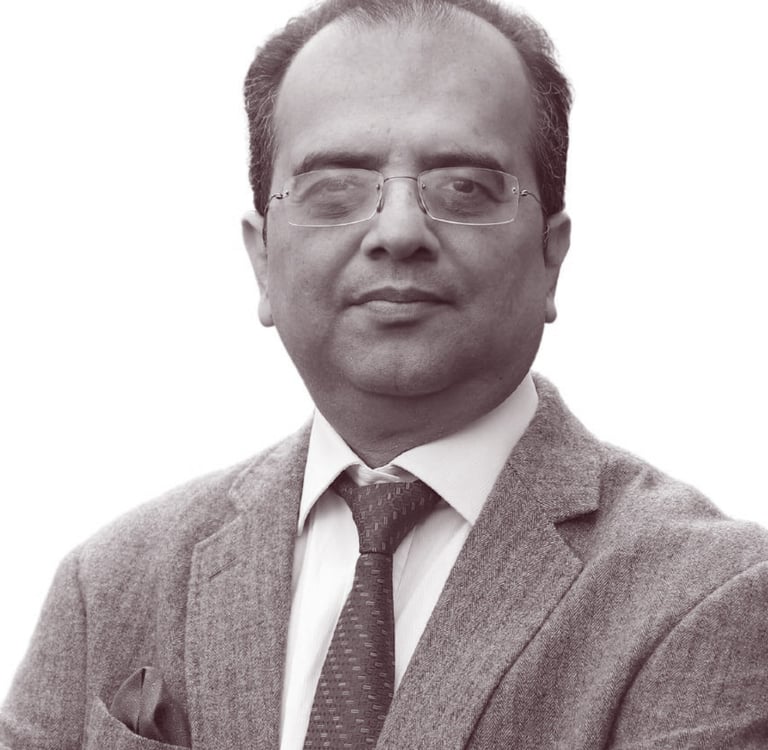

Dr. Samir Parikh is a psychiatrist at Fortis Healthcare and co-author, with Kamna Chhibber, of Alone in the Crowd: Overcoming Loneliness of Urban Living. In conversation with Shweta's Talkies, Parikh works from the World Health Organization's own founding definition — health as complete physical, mental, and social wellbeing, not merely the absence of disease — to a sharper, more specific critique: he points out that a "preventive health checkup" that excludes mental health should honestly be called a preventive physical health checkup, a small linguistic correction that reframes an entire industry's blind spot in one sentence. That precision runs through the conversation. Parikh distinguishes clinical terms from their casual misuse — trauma, popularity, follower — showing how loosely borrowed psychiatric vocabulary can obscure rather than clarify what people are actually experiencing. He connects this to India's Mental Healthcare Act of 2017, which decriminalized suicide attempts nationally and established a rights-based framework for care, and to Tele MANAS, the national tele-mental-health helpline he holds up as infrastructure that genuinely closes the gap between awareness and access — the conversation's real, recurring argument: India's crisis is not a lack of awareness but a lack of infrastructure that awareness alone cannot fix. The conversation's most personal segment concerns authenticity — what is lost when a life is filtered for presentation, and what a formative teacher once taught him about the difference between being seen and being known. Parikh also discusses Adayu, a Fortis initiative named for the Sanskrit root aayu, life or vitality, that folds an ancient Indian medical vocabulary into a contemporary clinical mental-health model. Recorded as part of Shweta's Talkies' coverage of health, policy, and the systems meant to support both.